It’s not about following trends when you choose between ghost mannequin and flat lay photography; it’s about making a smart, strategic choice. The format that works best depends on the type of product, the brand’s position, the sales channels, and the budget. Successful brands know that a $10 T-shirt and a high-end tailored suit should look different from each other.
In fact, big online stores use performance data to find out which style of photography works best for each kind of product. The best brands don’t choose one over the other; instead, they use both in smart ways on websites, marketplaces, and social media. This guide tells you the pros and cons of both new and established fashion brands including when to prefer the realism of virtual models as well as the best ways to use them, and expert advice.
Understanding Ghost Mannequin Photography
Before starting with the ghost mannequin photography, you need to understand what it is So, here’s a short A to Z ghost mannequin guide that you can refer to:
What is a Ghost Mannequin?
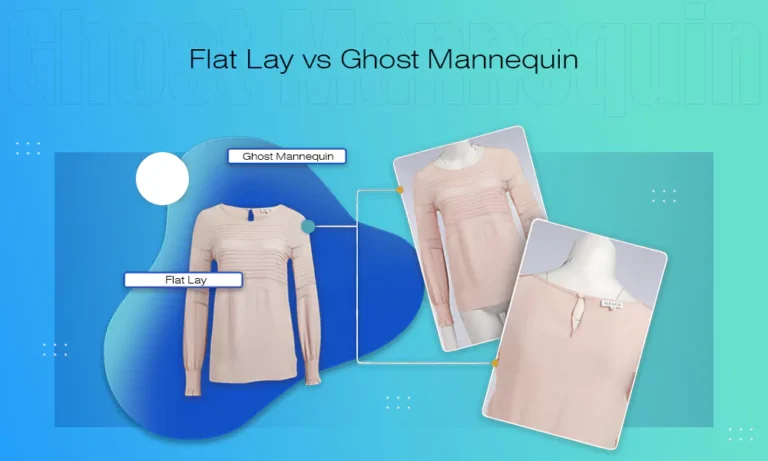
When you take pictures of clothes on a mannequin and then digitally take the mannequin out of the picture later, that’s called ghost mannequin photography, the invisible man effect, hollow man photography, or the neck joint technique. The last picture shows the clothes in a realistic, Three-dimensional way, as if they were being worn by an invisible model. It shows off their shape, structure, and fit. This way, clothes look real without any distractions. This is especially helpful for online clothing stores where people care a lot about how things fit and look when they decide what to buy.
How Ghost Mannequin Works
Ghost mannequin photography is a great way to connect online shopping with shopping in person. It helps people imagine how clothes will look on them by showing them in a shape that looks like a person. This makes buyers feel more sure about their purchase and less hesitant. It also clears up any doubts they may have about how the item will fit and drape. The method also makes an emotional connection, which makes an emotional connection, which makes products seem more expensive and desirable while still looking clean and professional.
Understanding Flat Lay Photography
Now that you have mastered the basics of ghost mannequin photography, it’s high time we learned more about flat-lay photography. Refer to the following headings:
What is the Skill of Flat Lay Photography?
In flat lay photography, you take pictures of things from above, as if they were on a table. Items are carefully placed on a flat surface to make a clean, organised display that shows off shape, color, and details without any distractions. This method, which is also called bird’s eye view photography or overhead photography, aims to make the product look simple and clear.
Why Flat Lay Works?
Flat lay photography is one of the easiest and most popular ways to take pictures for online stores because it makes products look real and consistent with very little work. It helps brands keep their catalogs the same while also lowering the cost of making things. This style is great for brands that want to save money and get the look they want because it doesn’t need much styling or post-processing.
Applications of Ghost Mannequin Photography and Flat Lay Photography
Each photography style suits different kinds of situations best. Here’s how:
When You Need a Ghost Mannequin
Ghost Mannequin photography is a must when showing off clothes where fit, structures, and silhouette are important to people who want to buy them. This method works great for structured, high-quality clothes like jackets, coats, dresses, suits, jeans, trousers, and tailored shirts because it shows how the clothes fit on a person.
It works best for outerwear, formal wear, and designer collections where the details of the construction, the way it hangs, and the proportion are important. High-end and luxury brands use ghost mannequin pictures to show off their work, make their products look more valuable, and make customers less afraid to buy.
Custom clothing labels and high-end marketplaces also like this method because it closely resembles the experience of trying on clothes in a store, which builds trust and emotional connection.
When Flat Lay Works Best?
Flat lay photography works best for products that are lightweight, versatile, and have a lot of accessories, where showing off the shape isn’t as important. This format works well for things like T-shirts, sweaters, casual dresses, jeans, scarves, belts, socks, jewellery, handbags, and beauty products.
Flat lays are great for fast-fashion e-commerce brands that want to keep their catalogues big, fast, and consistent while also keeping costs low. This method also works very well for marketing channels like Instagram, Pinterest, email campaigns, and editorial content, where how things look and how they tell a story are more important than how well they fit.
Flat lay pictures show clean, honest images that work well for lifestyle-driven ads and social media posts.
Ghost Mannequin vs Flat Lay: Side-by-Side Comparison
| Criteria | Ghost Mannequin Photography | Flat Lay Photography |
| Setup Complexity | Moderate to complex setup requiring mannequins, pinning, and controlled lighting | Simple and straightforward setup with minimal equipment |
| Cost Efficiency | Higher investment due to specialised mannequins and detailed post-production | Budget-friendly option ideal for large catalogs |
| Post-Production Time | Extensive retouching and compositing required | Minimal editing needed |
| Visual Impact | 3D, dimensional, and lifelike presentation | Clean, minimalist, and versatile appearance |
| Best Suited For | Premium brands and structured garments | Fast fashion, accessories, and social content |
| Skill Level Required | Professional-level expertise recommended | Beginner to intermediate friendly |
Professional Tips: How to Shoot for Ghost Mannequin & Flat Lay
Professional photography is much more tricky that you might think of it. Carefully following the steps is not enough alone. These are some practical tips from Visuals Clipping’s experts that you should follow-
Tips for Ghost Mannequin Photography
- Buy high-quality magnetic mannequins to get better results and work more efficiently over time.
- Keep the lighting the same to make post-production easier and make sure everything looks the same.
- Make templates for post-production that can be used over and over again to cut down on editing time.
- Take pictures of each piece of clothing from different angles so that it can be used on different platforms and layouts
Tips for Flat Lay Photography
- Gently tuck the sides of the tops to shape them naturally and make a realistic silhouette.
- To keep your flat lays from looking stiff and lifeless, add some movement to them.
- Use perfect symmetry on product pages to make people trust you and understand what you’re saying.
- Use creative asymmetry on social media to make it more interesting and give it a personality.
- Always use the same lighting for all of your flat lay shoots.
- To keep things the same, keep the camera’s height and angle the same.
- For a catalog that looks good, use the same background treatments.
- Make sure that the colors of your products are always the same so that customers are not disappointed.
Strategic Integration: Using Both Methods
The Mixed Method
- Use Ghost Mannequin photography as the main product images for high-end and structured items.
- To show off the fabric’s texture, material, and small details, add flat lay close-ups.
- Make creative flat lays for social media to get more people to interact with your posts and tell stories through pictures.
- Use Ghost Mannequin pictures as the main images on your website’s product pages.
- Make email campaigns with styled flat lay compositions to get more people to click through.
- Use ghost mannequin images on marketplaces to look professional and high-end.
- Use AI virtual models when you want lifestyle-style shots or want to try out different model looks without setting up another photoshoot.
Strategy for Each Channel
- Amazon and eBay: Ghost Mannequin as the main images for listings.
- Instagram and Pinterest: styled, creative flat lays that look good.
- Website lookbooks: a good mix of flat lay and ghost mannequin pictures.
- Test both styles in your advertising campaigns and use the one that works best.
Conclusion
There is no winner between ghost mannequin and flat lay photography. The best choice depends on your goals, products, and budget. Both methods are useful in modern e-commerce, but they work best when used strategically across channels. Smart brands start with what they can afford and then use performance data to make decisions about how to grow. Many editing and photography service providers also offer a free trial, which is a convenient method to test quality and workflow first before making a long-term commitment. In the end, the quality of the image is more important than the technique. Check your current product to make sure they really show off your brand and meet customer expectations.
Many editing and photography service providers also offer a free trial, which can be a practical way to test quality and workflow before making a long-term commitment.
FAQs
Q1. Is ghost mannequin photography or flat lay photography more affordable?
Ans: Flat lay is cheaper. Ghost mannequin needs special tools and a lot of editing after the fact.
Q2. Is it okay to use both ghost mannequin and flat lay on the same product page?
Ans: Yes. A lot of brands use ghost mannequins for their main photos and flat lays for their detail shots.
Q3. What kind of photography works best for e-commerce sales?
Ans: It depends on the kind of product. Ghost mannequins are best for high-end clothes, and flat lays work for accessories.