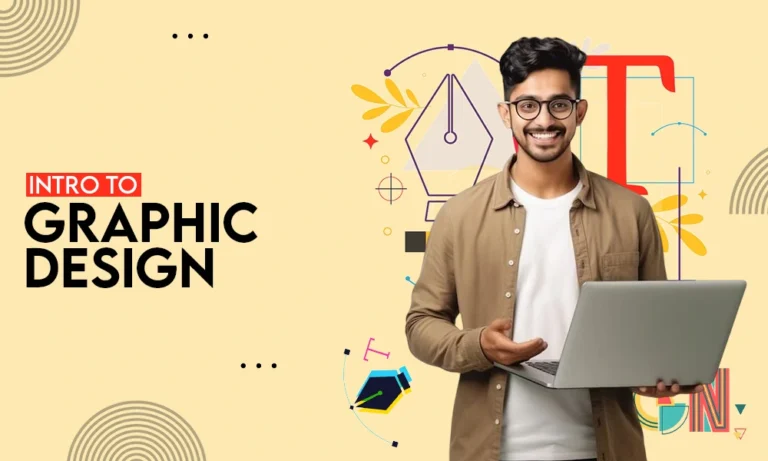
Nearly every aspect of what we see online and offline is influenced by graphic design, including websites, social media posts and other types of content, product packaging, advertising, and branding.
Beginners may be confused by the answer to the question: What is Graphic Design? While graphic design does involve creating things that are aesthetically pleasing, it is also a systematic and creative process that combines artistic expression with verbal communication and technology to provide effective visual solutions to problems.
The Graphic Design Guide provides a thorough definition of graphic design as well as information on graphic design elements and principles, graphic design formats and technologies, and graphic design career options, all presented in an informative and practical manner.
What is Graphic Design? (Definition & Importance)
Graphic design is an art form for conceiving and developing visual content to communicate ideas to the desired audience. Effective use of typography, imagery, colour combinations, and layout techniques provides solutions to your problems and conveys messages efficiently.
The history of graphic design goes back to the earliest humans’ symbols; the cave walls had symbols that served as artistic records of their day. Modern graphic design is a result of the development of printing press technology during the early 20th century. The graphic design industry has dramatically changed as a result of advances in digital technology. Graphic design has become an integral part of marketing and branding, as well as advertising (both print and digital), web design, and social media.
In today’s digital marketplace, strong graphic design provides a memorable identity for brands, creates a greater user experience, and retains customer loyalty. Thoughtful design makes information easier to comprehend and visually appealing, whether that’s through an eCommerce storefront or a social media campaign.
There is much confusion among novice designers between UI/UX design, visual design and graphic design. A key difference is that graphic design is an aesthetic medium for creating visually interesting and communicative graphics, while UI design is about creating the layout and usability of the interface, and UX design focuses on studying the way people interact with products and services.
Also Read: Most Famous Graphic Designers
Key Elements of Graphic Design
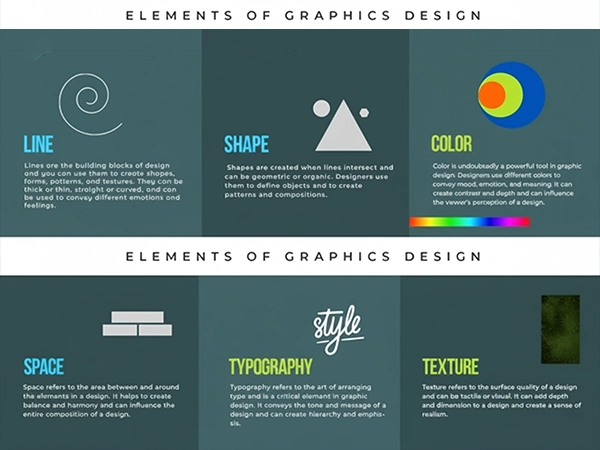
To understand how design works, it is essential to identify the fundamental components of design. Lines are the building blocks of almost every image; they create a path for the viewer to follow, separate different elements within an image, and provide structure within the image. Shapes give meaning to an image and represent tangible objects in either geometric/modern or organic/expressive ways.
One of the most important components of design is color; it can impact how a person feels, interprets, and even reads an image. Designers apply psychological principles and theories of harmony for the effective use of color in relation to the message conveyed through the designs.
Textures provide depth and three-dimensional quality to an image, particularly in digital design, where tactile information allows the designs to be more immersive. Space (also known as “white space”) allows for designs to breathe while maintaining clarity. A well-designed layout is accompanied by space, making the layout appear more polished and professional.
Another key design element is typography. Text can be presented in many different ways, font, spacing, alignment, hierarchy, etc. The way a piece of written material is presented can greatly affect its readability and impact on the viewer. Proper typography establishes a cadence and conveys emotional messages, directing the viewer’s attention through the design.
Fundamental Principles of Graphic Design
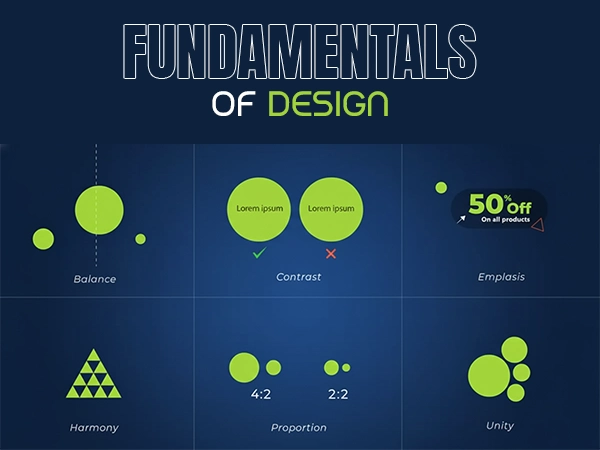
The fundamentals of design are easier to understand if you understand the basic elements of design. Lines provide the structure of all graphic designs, leading people’s eyes, providing separation between one element and another, and providing a style for the entire design.
Shapes represent the second element of graphic design and give meaning to the design. Shapes also help people define certain people or objects visually; hence, shapes add to the visual experience of people looking at designs.
Shapes may be either geometric shapes or organic shapes, giving a more contemporary or traditional appearance to a design. Similarly, colors play an extremely important role in graphic design and represent one of the foundations of graphic design because colors influence the viewer’s mood, perception, and ability to read the written content of a design.
It is for this reason that many designers use the principles of color psychology and color harmony when designing graphics for printed or digital presentation. Textures add to the overall realism of a graphic by adding depth and are especially important in a digital environment, where they are used to create a more immersive experience for the viewer.
Space is commonly referred to as white space or breathing room; space allows for greater separation of elements in the design, improves the clarity of the design, and makes a layout appear more clean and professional. Typography is also an essential element of design; typography can greatly affect the level of readability and impact of any written content contained within the graphic. Typography also creates a rhythm and emotional connection with the audience, and it helps lead your audience through the design.
Different Types of Graphic Design
The creative areas of graphic design are vast. Branding and Logo Design create the visual components such as logos, colour palettes, typography and a brand’s guidelines to represent who a company is. The focus of marketing and advertising design is to design promotional material in the form of print ads, digital ads, social media posts, and campaigns that drive sales and grab attention.
UI (User Interface) and web design take creativity in a visual way, combined with how functional a product is, to create user-friendly website/app layouts. Designers of Motion Graphics create animation, explanatory videos and effects to tell a story and support marketing or educational videos.
The areas where designers use illustration and digital artwork include: editorial design, advertising, the graphics on products, and the storytelling aspect of design. Packaging design takes into consideration the structural component of how a package looks while also promoting the product by including important information and getting visitors to buy.
Print Media Design consists of magazines, brochures, flyers, book layouts and posters and also shows how printed media can still provide value.
Read more- Types of Graphic Design
Graphic Design Career Opportunities
Graphic design is a burgeoning industry with many opportunities to choose from. Traditional roles in graphic design include graphic designer, brand designer, print designer and illustrator. Whereas digital advancements have created new roles such as UI designer, web designer, motion designer and visual content specialist and many graphic designers work on a freelance basis, working with agencies or start-ups or working globally.
Many successful Designers possess both technical skills and soft skills. The technical skills that are required to become a successful Designer include being able to use Graphic Design Software effectively, having an understanding of colour and typography and layout skills and knowing and keeping up-to-date with digital trends. The soft skills include communication, organisation, creativity, and problem-solving; all these skills are equally important when dealing with clients or team members.
Salary ranges can vary depending on Region and Level of Expertise; however, most Graphic Designers earn a competitive income, especially for those Graphic Designers who work in the Motion Design, UI/UX Branding Fields. The most important step in starting your career is to create a strong portfolio.
When building a Portfolio, those who are just getting started should create Personal Design Projects or redesign existing Designs and include World Work to show their Creativity, problem-solving abilities, and Technical Skills. A portfolio that is Consistent and well-organised and tells the Story of your History and Development is going to be the one that stands out.
The Future of Graphic Design
Technological innovations continue to advance graphic design in new directions through the development of artificial intelligence (AI) and automation, which will ultimately change how designers perform their job functions. Reducing repetitive task ingestion time, providing designers with an almost instantaneous ability to be creative through multiple variations of an idea, etc. Nevertheless, what is irreplaceable in this technological transformation is the human element of creativity, thought process, and human interaction.
With the emergence of Virtual/Augmented Reality (VR/AR) and 3D Design capabilities becoming more prevalent within brands and consumers’ demands for immersive experiences, Designers willing to learn about 3D Modelling, VR/AR design, and Animation will be highly sought after by businesses in various industries, including Gaming, Architecture, Advertising and Entertainment.
In addition to the increasing need for Graphic Designers with knowledge of Interactive Media, VR/AR Interface Design, Motion Graphics & AI-Directed Work Processes, the demand for skilled Graphic Designers will continue to grow as Businesses place greater importance on their visual communication efforts.
Frequently Asked Questions
Q1. What is the difference between graphic design and visual communication?
Ans: Graphic design produces visual objects, while visual communication combines graphic elements and conveys meaningful content effectively using typography, colour, layout, and design.
Q2. Can I learn graphic design without a degree?
Ans: Yes — many people successfully learn graphic design without a degree by taking online courses and tutorials, practising regularly, working with mentors, gaining project experience, seeking feedback, and improving consistently over time.
Q3. How long does it take to become a designer?
Ans: The time it takes to become a designer varies based on your learning speed, chosen area of specialization, time committed to study, the quality and number of projects in your portfolio, and your prior experience.
Conclusion
The essential aspects of Graphic Design are a combination of both Creative Development and Effective Communication. It is beneficial for beginning design students to have an understanding of the various aspects of graphic design, such as what graphic design is, its elements, principles, tools, career paths, etc.
To approach the graphic design field with confidence. Regardless of whether you want to pursue Graphic Design as a profession or as a talent, you will be utilising your creativity and visual communication skills; therefore, developing your visual communication skills will broaden your creative abilities. To further investigate beyond the basic subject of Graphic Design, seek out additional design tutorials, guides or design-related services to further your personal development at VisualClipping.