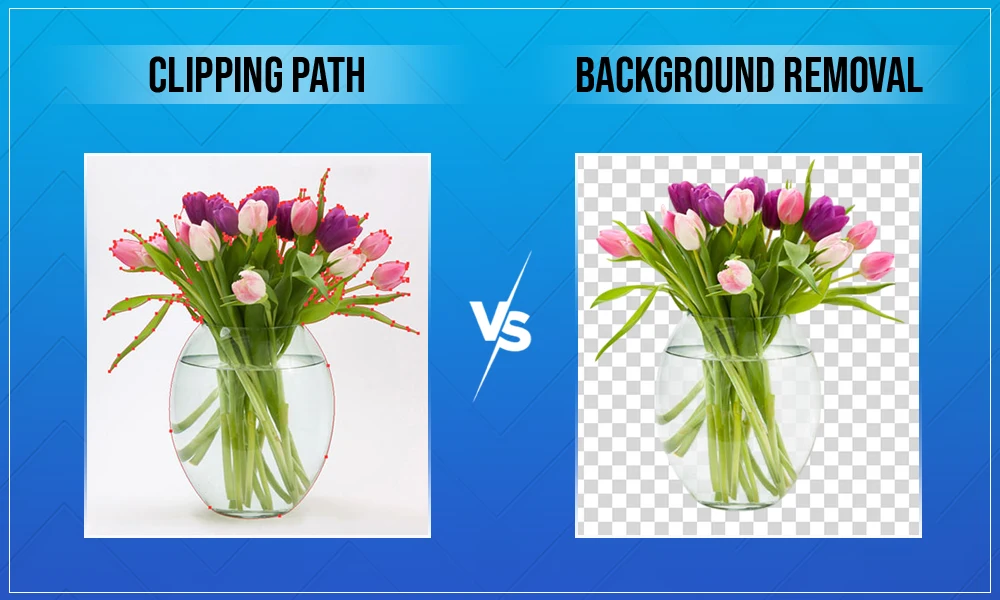
For many customers shopping online, product photographs are often their first contact with an eCommerce brand. Clear, precise, and very attractive photographs will have a substantial effect on:
- Customers’ purchasing decisions
- The degree of trust customers have in the brand
- The rate of conversion from visitor to buyer
As the number of businesses in the eCommerce sector increases rapidly, many businesses are using advanced photographic editing software to help improve the quality of their photographs. Right now, the debate frequently centres around the use of AI solutions vs manual editing for photographs.
Note: With a thorough understanding of the advantages and disadvantages of each solution, it is easier for ecommerce brands to find the best option for long-term growth and success.
Visuals Clipping provides a professional photo editing service specifically designed to meet the needs of ecommerce businesses, helping our clients make educated decisions regarding the use of photography for their ecommerce brands.
Understanding Photo Editing in Ecommerce: AI vs Manual
The basic image correction of an image represents a small part of what goes into photo editing for ecommerce. In addition to this, a complete ecommerce image editing service includes:
- Removing backgrounds
- Ensuring accurate colours
- Creating shadows
- Fixing imperfections
- Ensuring that the products are consistent between listings
AI photo editing uses algorithms that automate processes to perform ecommerce photo editing tasks quickly, as opposed to the manual method, which utilises skilled editors to manually adjust and enhance each image.
Both methods present products better to their customers, but they do vary greatly in execution and the levels of quality control and flexibility that they each provide. When determining which sister method of editing works best for their product types and branding as well as customer wants and needs, Ecommerce companies must choose accordingly based on a comparison of the two methods.
Key Benefits of AI Photo Editing for Online Stores
Ecommerce businesses use Artificial Intelligence (AI) technology for rapid and efficient photo editing, enabling them to edit ecommerce product photos quickly. This suits sellers who have large numbers of items to list and frequently add new items.
The use of AI tools is advantageous for ecommerce sites because it automates many of the activities that need to be performed to prepare photos for listing. The most common usages of AI photo editing include:
- Automating the removal of backgrounds
- Enhancing brightness
- Adjusting photo size to standard sizes
- Creating uniformed images across the site
By using AI editing technology, e-commerce businesses can cut back on the time and costs associated with photo editing, which is a major benefit for new businesses and businesses that sell a high volume of products. In addition, for simple products with simple backgrounds, AI photo editing provides adequately quick and good-quality results and allows the retailer to launch the product sooner.
Why Manual Photo Editing Still Matters for Ecommerce
AI image editing has been developed specifically for the fast and efficient operation of e-commerce sites. It allows the less time-consuming processing of many images in bulk by retailers that carry many items, or who make a lot of frequent product updates.
Retailers who use AI software are able to:
- Remove backgrounds automatically from photographs.
- Change the brightness of photos automatically.
- Have the same sized image in their individual product listings.
This creates a consistent look across all product listings created by retailers. Using an automated approach to edit your images, retailers save considerable time and cost, which is a key factor when businesses decide to outsource photo editing ecommerce business tasks. This is especially helpful for start-ups, as well as those selling a high volume of product.
Cost, Speed & Scalability: AI vs Manual Comparison
AI editing services are often the most efficient and economical solution for multiple image processing. Businesses focused on volume and speed often find AI editing services best suited to their needs.
| Feature | AI Editing | Manual Editing |
| Cost | Reduced upfront costs. | Generally more expensive. |
| Speed | Highly efficient for volume. | Slower turnaround time. |
| Quality | May result in lower quality editing. | High quality; fewer product returns. |
| ROI | Good for speed/volume. | Significant ROI via customer satisfaction. |
Most developing major ecommerce brands are finding a balance between using both AI Editing services for basic edits and “hands-on” editing for more complex, higher priority projects. Therefore, Visuals Clipping encourages companies to support scalable workflows combining efficiency with professional quality.
Which Approach is Best for Your Ecommerce Product Images?
Although new technologies are emerging, manual photo editing is still the primary source of providing high-quality images. Many of the elements of complex edges, luminous items, and reflective surfaces requiring a jewelry retouching service, can be very difficult for artificial intelligence (AI) to replicate, so relying on a human editor to finalize images is usually necessary.
Our team of Visual Clipping’s Editors will meticulously edit your photographs to produce high-quality images with realism and accuracy and consistency to your brand. Manual editing allows edits to be specifically tailored to the type of the product, and the company’s styling guidelines.
Consequently, consumers will have confidence in the polished images produced by an ecommerce company that utilizes manual photo editing techniques, achieving an exceptional high-end appearance, and a high degree of accuracy.
Making the Right Choice: Hybrid Workflows for Optimal Results
When deciding on what type of image edit, whether you prefer using a manual or AI method to edit your final photo, your decision will depend upon how much complexity is involved in the photo of your products and how fast you need your images processed.
Combining the two types of methods is what we believe to be the best choice for most online retail business owners.
Two methods combined give each company an opportunity to create visually appealing images that reflect their brands while also distinguishing them from their competition.
At Visual Clipping, we provide companies with high-quality photo retouching services, which pairs perfectly with today’s automated editing systems, providing companies with the ability to create images that are on par with global eCommerce standards while standing out amongst the crowd and providing a strong visual presence.
FAQs
Q1. What is the main difference between AI and manual photo editing?
Ans: AI editing uses automated algorithms to perform tasks like background removal and brightness adjustments instantly. Manual editing relies on skilled human editors to adjust specific details, manage complex edges, and ensure high-end realism that software might miss.
Q2. Is AI photo editing better for high-volume ecommerce stores?
Ans: Yes, for speed and scalability. AI is the most efficient solution for processing thousands of images quickly, making it ideal for retailers who list large numbers of products or frequently update their inventory.
Q3. When is manual photo editing necessary?
Ans: Manual editing is essential for products with complex needs, such as jewelry with reflective surfaces, intricate details, or items requiring shadow creation. It ensures a polished, high-quality look that builds customer trust and reduces return rates.
Q4. Can I use both AI and manual editing for my online store?
Ans: Absolutely. A hybrid workflow is often the best choice. You can use AI for bulk, basic edits (like resizing and background removal) and use manual editing for “hero” images or complex products to ensure the highest quality where it matters most.
Q5. Which method is more cost-effective?
Ans: AI editing generally has lower upfront costs and faster turnaround times. However, manual editing can offer a better Return on Investment (ROI) in the long run by reducing product returns and increasing conversion rates through superior image quality.