You must have heard the famous rule for better visual representation- “isolate the main subject, create a cleaner look, or match the visual style of your slides”. All these procedures require removing the background from the image.
To perform this better, deep etching and Image masking are here. The effect of the product image on the customer’s mind can be enhanced to a greater extent with the help of deep etching and image masking.
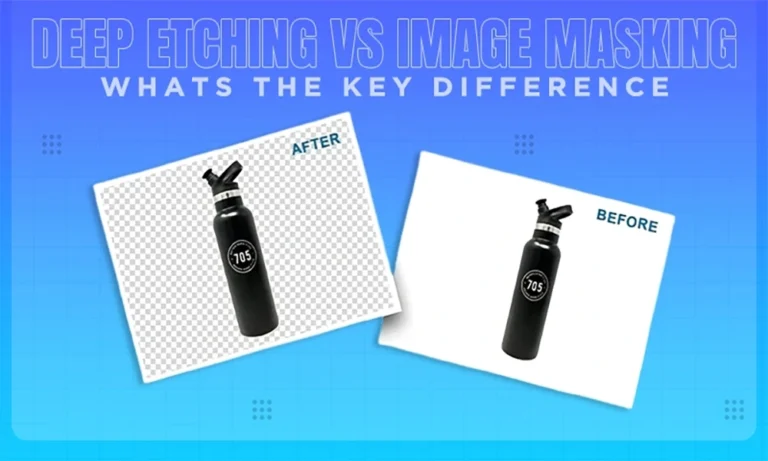
In sectors such as e-commerce, advertising, and professional photography, these two methods dominate the process of removing the background of an image: deep etching and image masking.
Continue reading to know more about deep etching and image masking in detail. Additionally, know about its applications, differences, professional service providers in this domain, and how to master these techniques within Photoshop.
What is Deep Etching?
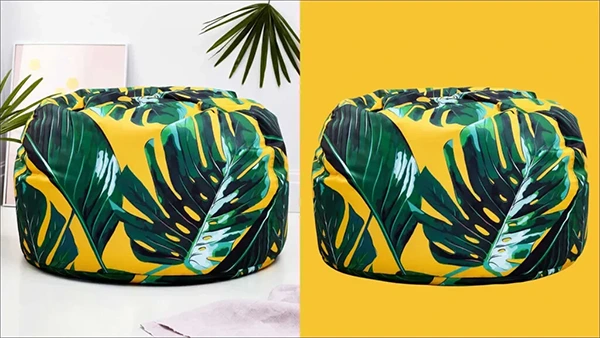
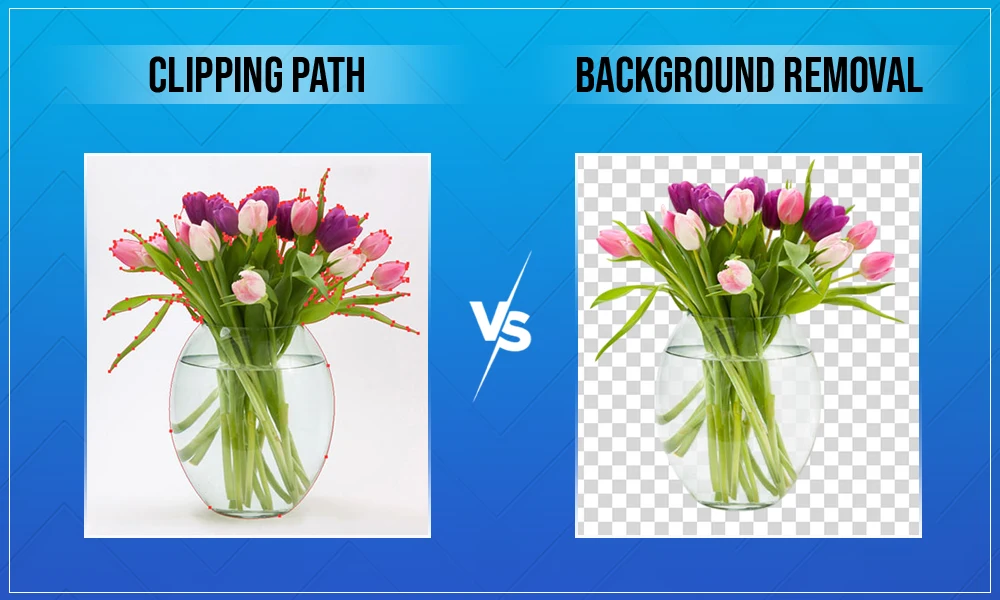
Deep etching is a photo editing method, and it helps you remove or change a picture’s background accurately. You can use programs like Adobe Photoshop for this. You create a clipping path with the Pen Tool. This path outlines the subject, and it lets editors separate the subject from the background for a clean, professional look.
Best Use Cases
Deep etching is most effective for images with simple, sharp, and defined edges, such as:
- Product photos (electronics, furniture, fashion items)
- Jewelry with clear outlines
- Logos, icons, or packaging shots
Benefits of Deep Etching
- Create crisp, sharp edges
- Ideal for photographs of e-commerce products
- Provides excellent control and precision.
- Guarantees that photos appear professional in advertisements, catalogs, and websites.
Deep Etching’s Limitations
- Time-consuming for soft-edge or highly detailed things (such as fur or hair).
- Complex designs may require advanced skills.
- Items that are clear or semi-transparent should not be used.
What is Image Masking?
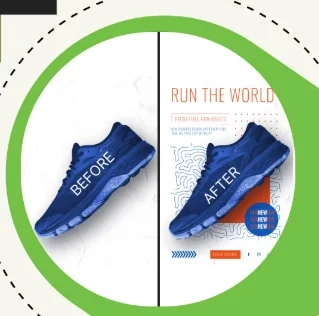
Image masking is a photo editing method, and it helps remove or isolate parts of an image that basic clipping cannot handle. Unlike deep etching, which is best for hard edges, masking works well for complex images. This includes fine details like hair, fur, feathers, or transparent fabrics.
Techniques of Image Masking
- Layer Masking: By concealing or exposing portions of an image, layer masking enables nondestructive editing.
- Alpha Channel Masking: For semi-transparent objects, alpha channel masking helps fine-tune transparency and make accurate choices.
- Hair/Fur Masking: A specialized technique for enhancing soft edges and creating a natural-looking appearance for hair strands or fuzzy textures.
Best Use Cases
- Portraits with flowing or loose hair.
- Items such as woollens, plush toys, and carpets that have rough or fuzzy edges.
- Things like smoke, veils, and glass that are transparent or semi-transparent.
Benefits of Image Masking
- Preserves organic details in intricate pictures.
- More freedom through non-destructive editing.
- Perfect for stylish photo editing and upscale eCommerce.
Image Masking’s limitations
- The process takes longer than deep etching.
- For realistic results, sophisticated editing abilities are needed.
- may make editing more expensive for large-scale projects.
Major Difference Between Deep Etching and Image Masking
The major difference between deep etching and image masking is the way in which they treat the edges of the subject: their fundamental method of isolation. One is a hard, accurate cut; the other is a gentle, soft blend.
| Feature / Aspect | Deep Etching (Clipping Path) | Image Masking |
| Technique | Uses the Pen Tool to create precise paths | Uses masks/layers to hide or reveal parts of an image |
| Tools Used | Photoshop Pen Tool, vector paths | Photoshop Layer Mask, Alpha Channel, Refine Edge |
| Difficulty Level | Easier for simple shapes with hard edges | More complex; requires skill for fine details |
| Best Use Cases | Jewelry, mobiles, furniture, logos, apparel | Hair, fur, feathers, transparent fabrics, and smoke |
| Output Precision | Crisp, sharp edges | Smooth, soft, and natural-looking edges |
| Turnaround Time | Faster for simple edits | Slower, depending on image complexity |
When to Use One Over the Other
- When working with items or products that have distinct, sharp edges, such as jewellery, electronics, or packaging, go with Deep Etching (Clipping Path). It’s quick and economical.
- For intricate or semi-transparent subjects like hair, fur, or textiles, choose Image Masking. It preserves subtle details while guaranteeing a natural finish.
- Occasionally, both methods are used together, with masking for fine details like hair strands and clipping path for the overall shape.
In short: Use clipping path for precision and masking for complexity.
Fun Fact
Deep etching, which removes sharp-edged objects, will typically be faster and more economical than image masking, although masking manages with troublesome details such as hair and transparent material. So the complex appearing task will generally be longer and more expensive—a little unexpected, no?
Which Technique is Right for You?
Choosing Based on Image Complexity
Deep etching is a great choice if your image has clear, sharp edges. This is common in jewellery, electronics, or packaged goods. Image masking gives perfect results without losing the fine details of subjects like hair, fur, or thin fabrics.
Cost and Time Considerations
Deep etching works well with simple shapes, making it faster and cheaper. On the other hand, image masking costs a bit more because it requires more time and precision. The best method depends on your project’s complexity and the detail you want to keep.
Professional Results and Industry Standards
For branding, advertising, and e-commerce, consistency and quality are very important. To achieve the best results, professional editors often combine both methods. By hiring professionals, you may cut down on mistakes, save time, and receive edits that meet industry standards, making your images stand out in a crowded market.
Conclusion: Choosing the Right Technique
Deep etching and image masking are essential for modern photo editing, especially in high-end e-commerce and advertising industries demanding top-quality images. Deep etching is great at isolating items with defined edges, allowing flawless background removal and sharp image cutouts. Image masking is where minutiae and detail abound, preserving natural textures and soft edges.
At its core, quality is a priority for most of us. Use professional services by Visual Clipping to get quality work in very little time. They provide pixel-perfect cutouts within deep etching services and flawless edits in image masking services.